info@sriyaent.com
 +91 9825375241
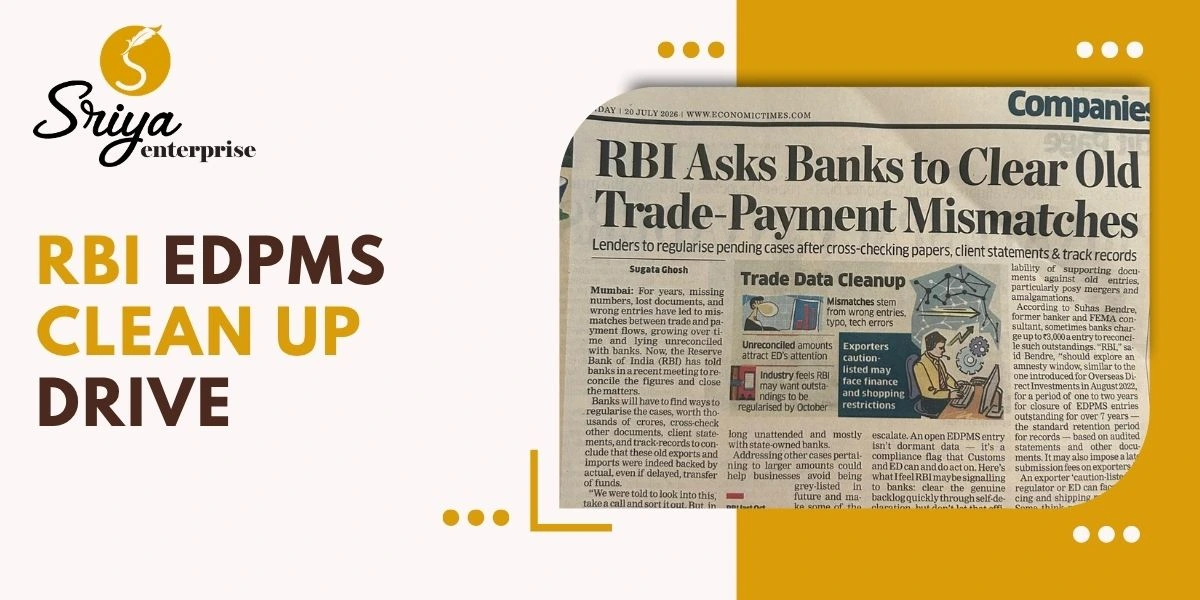
RBI Trade Data Cleanup: Why Sriya Enterprise is Urging Businesses to Reconcile EDPMS /IDPMS Entries…

If your business relies on cross-border trade, software sales, or international service delivery out of India, the regulatory clock just sped up.
In a significant policy reversal on June 5, 2026, the Reserve Bank of India (RBI) announced that it is rolling back its recent extended timelines. The mandatory period within which the full value of exported goods, software, and services must be realized and repatriated back into India stands reduced from 15 months down to 9 months.
This decision, announced by RBI Governor Sanjay Malhotra alongside the steady 5.25% repo rate decision, marks a sharp transition from the relaxed pandemic and geopolitical-crisis-era trade cushions back to a strict, tighter regulatory regime.
Why the Change? Reading Between the Lines
Over the last couple of years, the RBI extended the realization period to 15 months to provide crucial operational breathing space to exporters battling massive maritime trade shocks, supply chain delays, and West Asian trade route logistics issues
However, macro priorities have shifted. The move to revert to a 9-month window is explicitly designed to:
- Ensuring that hard foreign currency returns to the Indian banking ecosystem much quicker.
- Strengthening India’s capital inflows and fortifying the rupee against volatile global economic trends – Support the Balance of Payments (BoP)
Stay ahead of RBI regulations and avoid costly compliance risks.
Connect with Sriya Enterprise for expert guidance on export realisation and FEMA compliance.
What This Means for Exporters, IT Hubs, and Service Providers
The reduction of an entire six months from your collection deadline means that previous operational laxity is no longer an option. This change carries immediate implications for corporate finance, treasury, and accounting teams across India:
| Impact Area | Reality Under the 9-Month Limit |
| Credit Cycles | Accounts Receivable (AR) teams must immediately auditing aging invoices and stop offering extended payment terms (like 12+ months) to foreign buyers. |
| Contract Renegotiations | New international Master Service Agreements (MSAs) or product delivery timelines must align strictly with a tighter payment turnaround. |
| Compliance Strain | Failure to bring funds back within 9 months triggers automatic tracking under the RBI’s EDPMS (Export Data Processing and Monitoring System) or SOFTEX pipelines, risking stiff FEMA penalties. |
Failing to realize export earnings within the prescribed timeline is treated as a civil offense under the Foreign Exchange Management Act (FEMA). Penalties can scale up drastically based on the unrepatriated value, putting your Authorized Dealer (AD) banking lines at risk
At Sriya Enterprise, we specialize in taking the friction out of cross-border trade operations. We help MSMEs and growing exporters transition seamlessly to this tighter regime through:
Don’t let a 6-month timeline drop disrupt your global growth. Let our team handle the regulatory heavy lifting so you can focus on scaling your business.
Schedule a Complimentary Trade Compliance Audit with Sriya Enterprise today
Related Posts