info@sriyaent.com
 +91 9825375241
If your business relies on cross-border trade, software sales, or international service delivery out of…
RBI Trade Data Cleanup: Why Sriya Enterprise is Urging Businesses to Reconcile EDPMS /IDPMS Entries Now
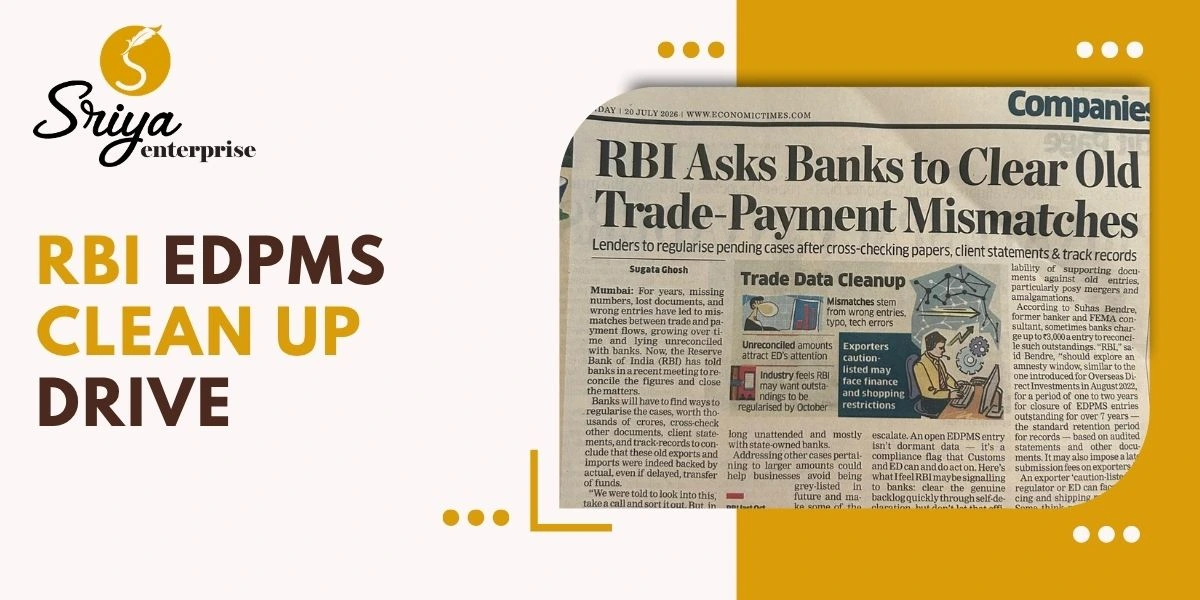
The Reserve Bank of India (RBI) has launched a decisive, high-stakes cleanup operation in India’s banking sector. In a strategic move designed to purge chronic macro-data distortions, the central regulator has instructed commercial banks to aggressively reconcile and close a massive backlog of un-reconciled, dormant import-export records spanning several years.
These outstanding entries, running into thousands of crores, represent a long-festering mismatch between physical trade data and the corresponding actual banking remittance channels. For businesses engaged in international trade, ignoring this aggressive administrative cleanup drive poses immediate, severe operational risks.
The Roots of the Data Mismatch: Why Now?
For years, data gaps have quietly accumulated across tracking portals, specifically the Export Data Processing and Monitoring System (EDPMS) and the Import Data Processing and Monitoring System (IDPMS). These unclosed files typically stem from:
- Missing tracking numbers, lost documentation, and typographical errors during manual entry.
- Systemic integration gaps left in the wake of major public and private sector bank mergers.
- Delays or failures in submitting Foreign Inward Remittance Certificates (FIRC) and supporting credit notes by exporters.
While previously treated as dormant historical logs, the RBI is now putting immense pressure on lenders to resolve these discrepancies by October 2026. Banks have been actively instructed to cross-verify alternate paper trails, audit client statements, and check independent tracking records to flush these legacy cases out of the system.
The Regulatory Trap: An open entry in EDPMS or IDPMS is not just static historical noise. Under the strict surveillance of India’s regulatory frameworks, an unclosed transaction acts as an active compliance trigger. Failure to close these entries leaves importers and exporters exposed to aggressive audits, hefty late submission fees, and targeted enforcement actions by the Customs Authorities and the Enforcement Directorate (ED).
The October 1st Connection: Paving the Way for New FEMA Frameworks
This coordinated administrative push is not happening in a vacuum. It serves as the critical regulatory groundwork for a historic shift: the upcoming implementation of the unified FEMA (Export and Import of Goods and Services) Regulations, set to take effect on October 1st.
The regulator is deliberately de-centralizing specific administrative powers down to Authorized Dealer (AD) banks starting this October to simplify the flow of future business. However, to transition into this highly digital, automated, and tightly integrated new reporting ecosystem, the RBI is demanding that all legacy data clutter be aggressively cleared. Banks are expected to witness a significant increase in administrative workloads, making immediate cooperation crucial for corporate clients.
Need help with EDPMS or IDPMS reconciliation? Contact us for expert support in closing pending entries and ensuring hassle-free FEMA compliance.
Operational Risks of a ‘Caution-Listed’ Status
If corporate entities allow these legacy entries to remain unaddressed, they face the severe risk of being placed on the regulatory ‘Caution-List’. A caution-listed status can instantly freeze a company’s international operations by imposing immediate restrictions on trade financing, disabling packing credit lines, and creating massive bottlenecks at shipping docks and customs checkposts.
How Sriya Enterprise Protects Your Global Operations?
Navigating the complex technical intersections of commercial banks, customs portals, and shifting RBI mandates requires dedicated, expert advisory. As specialist FEMA consultants, Sriya Enterprise has got hands on experience of resolving EDPMS Nand IDPMS open enteries, we can steps in to insulate your business from compliance shocks, ensuring a seamless transition before the October 1st deadline.
Our dedicated compliance team manages the end-to-end cleanup process by auditing your historical trade logs across EDPMS/IDPMS, pinpointing missing documentation, structuring defensive client statements, and directly liaisoning with your Authorized Dealer banks to close pending mismatches smoothly.
Frequently Asked Questions
The RBI EDPMS Cleanup Drive is an initiative to reconcile and close pending EDPMS and IDPMS entries. It aims to improve trade data accuracy and ensure businesses comply with FEMA and RBI regulations.
Reconciliation helps match export and import transactions with banking records and supporting documents. It reduces compliance risks, prevents transaction delays, and supports smooth international trade operations.
Unresolved entries may lead to regulatory scrutiny, delayed trade transactions, restrictions from Authorized Dealer (AD) banks, and even placement on the RBI Caution List.
Businesses may need Foreign Inward Remittance Certificates (FIRC), shipping bills, Bills of Entry, invoices, credit notes, bank advice, and other trade-related documents.
Exporters, importers, manufacturers, traders, and companies with pending EDPMS or IDPMS records should review their transactions and coordinate with their AD banks before the RBI deadline.
Sriya Enterprise provides end-to-end support, including reviewing pending entries, identifying missing documents, coordinating with AD banks, and ensuring compliance with FEMA and RBI regulations.
Conclusion
The RBI EDPMS Cleanup Drive is a critical opportunity for businesses to clear pending trade records and strengthen their compliance with FEMA regulations. Resolving outstanding EDPMS and IDPMS entries before the regulatory deadline can help avoid operational disruptions, regulatory action, and restrictions on international trade. By taking proactive steps today and partnering with experienced compliance experts like Sriya Enterprise, businesses can ensure seamless trade operations and stay prepared for India’s evolving regulatory framework.
Related Posts