info@sriyaent.com
 +91 9825375241
The Enforcement Directorate (ED) has declared that 2025 will see a sharpened focus on violations…
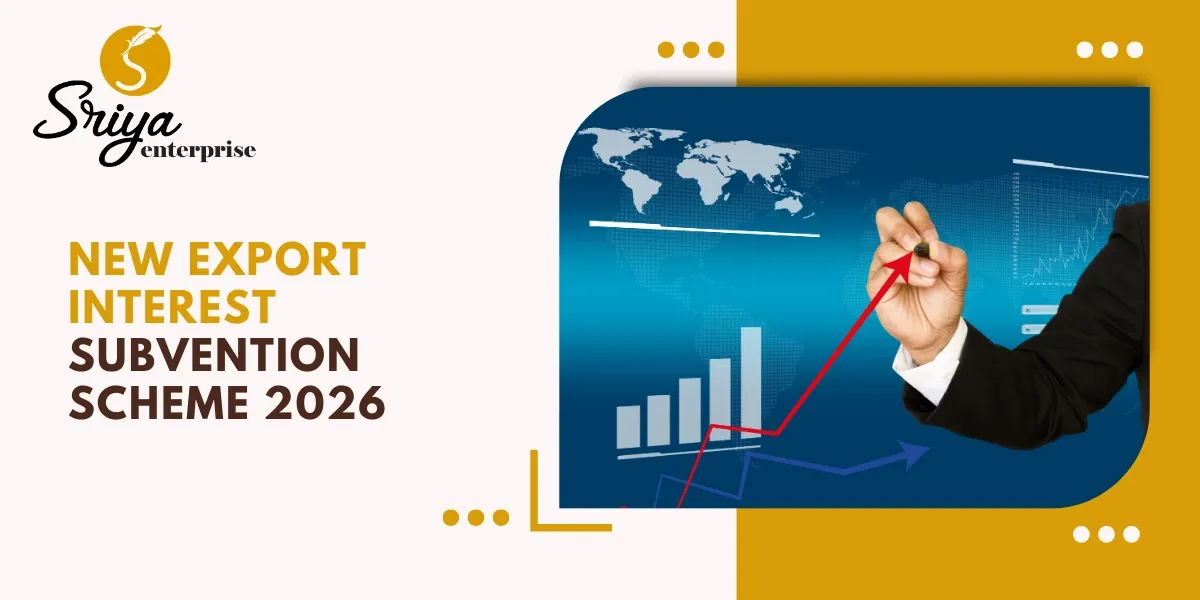
The Interest Subvention Scheme for MSME Exporters has been a hot topic in trade circles lately, especially with the recent government announcements under the Export Promotion Mission (EPM) – Niryat Protsahan. If you’re an exporter or importer dealing with international trade, understanding these updates can help optimize your working capital and stay compliant.
Key Highlights from the Latest Announcement
The Government of India launched a new Interest Subvention Scheme in early January 2026 as part of the six-year Export Promotion Mission. This replaces/extends support from the earlier Interest Equalisation Scheme (which lapsed on December 31, 2024).
The objective behind it is to reduce the cost of export credit, ease liquidity for MSMEs, and boost competitiveness in global markets. A base interest subvention of 2.75% per annum on pre-shipment and post-shipment rupee export credit from eligible lending institutions (like scheduled commercial banks). Per MSME exporter, maximum benefit of ₹50 lakh per exporting firm per financial year. Applies to exports under a positive list of notified HSN six-digit tariff lines (covering about 75% of India’s tariff lines, focusing on sectors with high MSME participation)
But, restricted/prohibited items, waste/scrap, PLI-covered products, and items already excluded under schemes like RoDTEP (Remission of Duties and Taxes on Exported Products) and RoSCTL (Rebate of State and Central Taxes and Levies). This means certain steel, pharmaceutical, chemical, and engineering goods (especially some steel items) are not covered, disappointing many in those sectors.
The process is different than the erstwhile interest subvention schemes, eligible exporters must file an “Intent to Avail” on the DGFT portal to get a Unique Identification Number (UIN) before approaching banks. Benefits are passed upfront by banks and reimbursed through RBI, its started on a pilot basis via RBI and DGFT.
Why This Matters for Exporters and Importers?
For exporters (especially MSMEs), this scheme can significantly lower borrowing costs on rupee export credit, improving cash flow for procurement, production, and shipments. However, the exclusions and cap mean not everyone benefits equally—sectors like steel, chemicals, and some engineering goods may need alternative financing strategies.
For importers, while this is export-focused, better exporter liquidity often stabilizes supply chains, reduces delays, and can indirectly support import needs (e.g., raw materials for export-oriented units)
Need help with export incentives or interest subvention? Contact us and let our experts guide you every step of the way.
How Sriya Enterprise Can Help You Navigate This?
At Sriya Enterprise, we specialize in Trade Finance Advisory, FEMA/RBI compliance, and export-import regulatory guidance to help businesses like yours maximize benefits from such schemes while staying fully compliant.
Our services include:
- Transaction Advisory & Assistance — Guidance on availing interest subvention, preparing DGFT applications (like UIN filing), LC reviews, and export credit structuring.
- FEMA & Regulatory Compliance — Advising on RBI approvals, export incentives, pre/post-shipment finance, and avoiding pitfalls in cross-border transactions.
- Structured Trade Finance Solutions — Helping MSMEs access competitive funding options, including conventional and structured finance tailored to your export needs.
- Training & Workshops — Customized sessions on trade finance, FEMA implications, Incoterms, and scheme-specific compliance for exporters, importers, and teams.
Whether you’re checking eligibility under the new positive list, optimizing your export credit costs, or ensuring smooth remittance/compliance, our expertise can save you time, reduce risks, and unlock better financial terms.
Ready to explore how this scheme (or other incentives) can work for your business? Contact Sriya Enterprise today for a free consultation. Visit our website at sriyaent.com or reach out via email/phone—we’re here to make your international trade smoother and more profitable.
Stay updated with the latest trade news and tips—subscribe to our blog for more insights on export-import regulations, incentives, and best practices!
Frequently Asked Questions
It is a government-backed scheme launched in January 2026 under the Export Promotion Mission (Niryat Protsahan) to reduce the cost of rupee export credit for eligible MSME exporters.
The new scheme replaces/extends the earlier Interest Equalisation Scheme (which ended on 31 December 2024) with revised interest rates, eligibility criteria, product exclusions, and a new DGFT-based application process.
Eligible MSME exporters can receive an interest subvention of 2.75% per annum on pre-shipment and post-shipment rupee export credit.
Yes. The maximum benefit is capped at ₹50 lakh per exporter per financial year.
The scheme applies to MSME exporters whose products fall under the notified positive list of six-digit HSN tariff lines, covering around 75% of India’s tariff lines.
Restricted or prohibited items, waste/scrap, PLI-covered products, and goods excluded under RoDTEP and RoSCTL are not eligible. Some steel, chemical, pharmaceutical, and engineering products are also excluded.
Conclusion
The New Export Interest Subvention Scheme under the Export Promotion Mission marks an important shift in how the Government of India supports MSME exporters. By offering interest relief on pre- and post-shipment rupee export credit, the scheme aims to ease liquidity pressure, improve competitiveness, and strengthen India’s export ecosystem. However, with product exclusions, benefit caps, and a new application process involving DGFT UIN filing, exporters must approach the scheme carefully. Understanding eligibility, compliance requirements, and banking procedures is critical to actually realizing the benefit. With the right advisory and structured planning, MSMEs can leverage this scheme effectively while avoiding operational or regulatory hurdles.
Related Posts